ECology
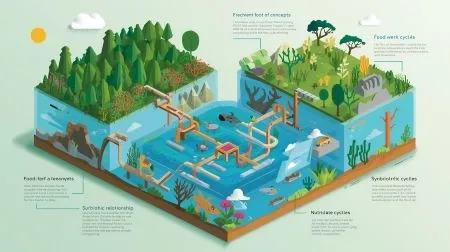
Ecology is the scientific study of the relationships and interactions between living organisms and their physical environment, forming one of the most fundamental and comprehensive branches of biological science. It seeks to understand how organisms — including plants, animals, fungi, and microorganisms — interact with each other and with their surrounding abiotic environment, which includes factors such as sunlight, temperature, water, soil, and atmospheric gases. Ecology examines life at multiple levels of organization, from individual organisms and populations to communities, ecosystems, biomes, and the entire biosphere, providing a holistic understanding of the natural world and the complex web of dependencies that sustain all life on Earth.The field of ecology is organized into several interconnected sub-disciplines. Population ecology studies the dynamics of individual species populations, including their size, density, distribution, and the factors that cause them to grow, decline, or fluctuate over time. Community ecology examines the interactions between different species within a shared habitat, including predation, competition, symbiosis, parasitism, and mutualism. Ecosystem ecology focuses on the flow of energy and the cycling of nutrients through biological communities and their physical environments, studying processes such as photosynthesis, decomposition, and the carbon and nitrogen cycles. Landscape ecology and global ecology address large-scale spatial patterns and the interactions between ecosystems across continents and the entire planet, increasingly important in the context of climate change and global biodiversity loss.Ecology has immense practical significance in addressing some of the most critical environmental challenges of our time. It provides the scientific foundation for conservation biology, wildlife management, habitat restoration, and the design of nature reserves and protected areas. Ecological principles guide sustainable agriculture, forestry, fisheries management, and urban planning, helping societies use natural resources without depleting them. The concept of ecosystem services — the benefits that healthy ecosystems provide to humanity, including clean air, clean water, fertile soils, and climate regulation — underscores the economic and social value of preserving natural environments. As biodiversity loss, habitat destruction, invasive species, and climate change increasingly threaten the stability of the world's ecosystems, ecology has become one of the most urgently important scientific disciplines of the 21st century, providing the knowledge and tools necessary to protect and sustain the natural systems upon which all life, including human civilization, ultimately depends.
Understand the relationships between living organisms and their environment. Learn about ecosystems, food chains, population dynamics, and environmental balance. This category explains how life interacts within natural systems.
ECology - Part 1
ECology - Part 2
ECology - Part 3
ECology - Part 4
Quiz Format & Structure
Each quiz is designed to comprehensively test your knowledge on the selected topic. Here's what you can expect:
Tips for Success
1. Read Questions Carefully
Take your time to read each question thoroughly. Since there's no time limit, make sure you understand what's being asked before selecting an answer.
2. Eliminate Wrong Options
If you're unsure, try eliminating options you know are incorrect. This increases your chances of selecting the right answer.
3. Don't Second-Guess Too Much
Your first instinct is often correct. While you should be careful, avoid changing answers unless you're certain you made a mistake.
4. Review Before Submitting
Before hitting submit, review all your answers to ensure you haven't accidentally skipped any questions or made careless mistakes.
5. Learn from Mistakes
After viewing your results, take time to understand why you got certain questions wrong. This helps improve future performance.
6. Take Multiple Attempts
Don't worry about getting everything right the first time. Taking quizzes multiple times helps reinforce your knowledge.
Explore More SubCategories Explore the Animal World
Explore more subcategories and test your knowledge!

Zoology
Study the scientific classification, anatomy, physiology, and behavior of animals. Learn about different animal groups, adaptations, and evolutionary patterns. This category deepens understanding of animal life and biodiversity.
Biodiversity
Understand the variety of life forms on Earth, including genetic, species, and ecosystem diversity. Learn about conservation, threats to biodiversity, and ecological importance. This category emphasizes protecting natural resources and life balance.
Food chain
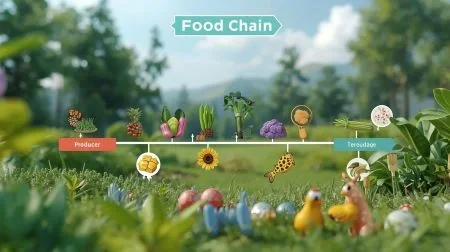
Understand the flow of energy and nutrients through ecosystems via producers, consumers, and decomposers. Learn about trophic levels, food webs, and ecological balance. This category explains how living organisms depend on each other for survival in nature.
Animal Kingdom
Explore the fascinating world of animals, from microscopic organisms to complex mammals. Learn about classification, habitats, adaptations, food chains, and unique characteristics of different species. This category helps you understand biodiversity and the vital role animals play in maintaining ecological balance.