Select Category
All Categories
Accounting
Agriculture
Astrobiology
Banking & Finance
Business World
Civilizations
Commerce & Economics
Competitive exams
Computer Science & IT
Current affairs
Earth Science
Education
Environment
Explore the Animal World
Food chain
General Knowledge
Geography Map
Green Life
History
Human Health
Journalism
Law
Science
Social Science
TAX
About Us
Contact Us
Login
ECology - Part 4
1
of
25
💡
Hints:
3
Q1. What’s the food chain in order
A. producer,secondary,tertiary,primary
B. producer,primary,secondary,tertiary
C. ,primary,producer,secondary,tertiary
D. tertiary,primary,producer,secondary
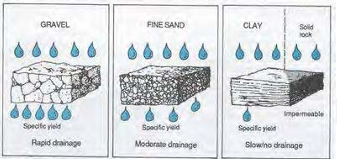
Q2. What is the relationship between particle size and permeability?
×
A. As particle size increases, the permeability decreases.
B. As particle size increases, the permeability increases.
C. As permeability decreases, the particle size decreases.
D. As permeability increases, the particle size remains constant.
Q3. Exponential growth in a population slows down or stops as
A. resources become limited.
B. rate of immigration increases. .
C. rate of emigration decreases.
D. birth rate increases.
Q4. What percent of Earth’s lands have humans developed and used for their on purposes?
A. 90%
B. 50%
C. 30%
D. 20%
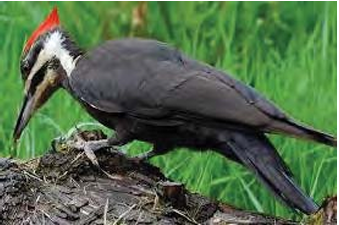
Q5. Is this picture an example of a mutualistic symbiosis?
×
A. Yes
B. No
Q6. The following natural events will cause primary succession to occur:
A. floods and hurricanes
B. wildfires and controlled burns
C. tsunamis and tornadoes
D. glacier movement and volcanoes
Q7. Wind causes several trees to fall in a forest ecosystem. This is an example of a/an
A. Abiotic factor
B. Biotic factor
Q8. Burning firewood uses the process of
A. decomposition
B. respiration
C. photosynthesis
D. combustion
Q9. Organisms that break down dead things for food are:
×
A. Scavengers
B. Decomposers
C. Posers
D. Parasites
Q10. The place where an organism lives and that provides the things the organism needs is called its
×
A. niche
B. habitat
C. community
D. biome
Q11. Some scientists think that global warming may be
A. a natural variation in climate.
B. a result of human activities.
C. melting the polar ice caps.
D. all of these
Q12. These kind of observations are made using instruments such as rulers, balances and thermometers.
A. Qualitative
B. Quantitative
C. Scientific
Q13. Temperate grasslands are also known as
×
A. Savanna
B. Chaparral
C. Prairie
D. Taiga
Q14. Which of the following is a density independent factor?
A. competition for resources
B. predation
C. disease
D. natural disasters
Q15. A model used to show the transfer of matter and energy through an ecosystem is called a
A. Energy graph
B. Matter chart
C. Energy model
D. Food Chain
Q16. What does a Primary Consumer eat?
A. Tertiary Consumers
B. Secondary Consumers
C. Producers
D. Heterotrophs
Q17. Which is the correct order of the Earth’s Biosphere?
A. Biosphere, Community, Population, Ecosystem, Organism
B. Community, Population, Ecosystem, Organism, Biosphere
C. Organism, Population, Community, Ecosystem, Biosphere
D. Organism, Community, Ecosystem, Population, Biosphere
Q18. Any living thing that gets the energy it needs by making its own food.
A. photosynthesis
B. cellular respiration
C. producer
D. consumer
Q19. symbiotic relationship in which one organisms benefits and the other organism is not affected
×
A. competition
B. mutualism
C. parasitism
D. commensalism
Q20. ___ is the chemical process that plants use to change the sun’s energy into a food source (glucose).
A. cellular respiration
B. photogenesis
C. photosynthesis
D. photoreactor
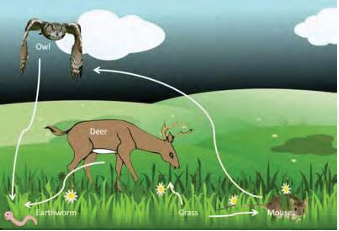
Q21. Which of the following is a biotic factor?
×
A. wharle
B. water
C. rock
D. wind
Q22. A lion is not
A. prey
B. consumer
C. predator
D. carnivore
Q23. Which cycle would be affected to the greatest extent by the destruction of the Earth’s huge rain forests?
A. water cycle
B. carbon cycle
C. nitrogen cycle
D. None of these is greatly affected
Q24. Only biotic factors.
A. population and ecosystem
B. community and biome
C. population and community
D. population and biome
Q25. What is at the base of every food chain?
A. Producers
B. Primary Consumers
C. The Sun
D. Secondary Consumers
Submitting Your Quiz...
Please wait while we process your answers