Competitive exams
This category is a strategic resource designed to bridge the gap between academic learning and career success. It focuses on the rigorous preparation required for entrance tests and government recruitment exams, covering quantitative aptitude, logical reasoning, and verbal ability. Learners will find tips on time management, stress reduction, and pattern recognition to optimize their performance. By providing systematic practice materials and exam-specific strategies, this section aims to boost confidence and accuracy, helping aspirants navigate the highly competitive landscape to achieve their professional and academic goals.

Law(GU)
Start Quiz
0/7
Law એ એક અત્યંત વ્યાપક અને મહત્વપૂર્ણ વિષય છે જે સમાજમાં વ્યવસ્થા, ન્યાય, અને નૈતિકતા સ્થાપિત કરવા માટે બનાવેલા નિયમો, સિદ્ધાંતો, અને કાયદાઓના અભ્યાસ સાથે સંબંધિત છે. Law is the comprehensive and systematic body of rules, regulations, principles, and norms established and enforced by governing authorities to regulate human conduct, resolve disputes, protect individual rights, and maintain social order within a society or state. Derived from the Latin term "lex" meaning rule or regulation, law permeates every aspect of human social, political, economic, and cultural life, providing the foundational framework within which individuals, organizations, and governments interact and coexist. The study of law in the Gujarati language context is particularly significant for students, legal professionals, judicial officers, and citizens of Gujarat who seek to understand legal principles, constitutional rights, judicial processes, and statutory provisions within their own linguistic and cultural framework, making legal knowledge more accessible and practically applicable for Gujarati-speaking communities across India. The Indian legal system, which forms the primary context for the study of law in the Gujarati language, is one of the oldest and most comprehensive legal systems in the world, rooted in a rich tradition of ancient legal texts such as the Manusmriti and Arthashastra, transformed by centuries of Mughal and British colonial legal influence, and ultimately shaped into a modern constitutional democracy through the adoption of the Constitution of India in 1950. The Constitution of India, drafted under the chairmanship of Dr. B.R. Ambedkar, is the supreme law of the land, establishing the framework of governance, distributing powers between the Union and State governments, and guaranteeing a comprehensive set of Fundamental Rights — including the right to equality, freedom of speech and expression, protection against exploitation, freedom of religion, cultural and educational rights, and constitutional remedies — to all citizens. The Indian legal system encompasses multiple branches of law including constitutional law, criminal law, civil law, family law, property law, contract law, labour law, administrative law, and commercial law, each governing distinct aspects of human legal relationships and social organization. The study of law in the Gujarati language covers essential legal concepts, statutory provisions, and judicial principles that are directly relevant to the lives of Gujarati-speaking citizens and legal practitioners. Key legislative enactments that form the core of legal studies include the Indian Penal Code (IPC), the Code of Criminal Procedure (CrPC), the Code of Civil Procedure (CPC), the Indian Evidence Act, the Indian Contract Act, the Transfer of Property Act, the Hindu Marriage Act, the Negotiable Instruments Act, and numerous state-specific laws applicable within Gujarat. The Gujarat High Court, established in 1960 following the bifurcation of the former Bombay State, serves as the highest judicial authority in the state, supervising the administration of justice across Gujarat's district and subordinate courts. Legal education in Gujarat is provided by several prestigious law colleges and universities, including the Gujarat National Law University (GNLU) in Gandhinagar, which has emerged as one of India's premier legal education institutions. The Lok Adalat system, legal aid clinics, and alternative dispute resolution mechanisms play important roles in providing accessible justice to the people of Gujarat. Understanding law in one's native language empowers citizens to know and assert their legal rights, participate more effectively in democratic processes, access legal remedies when needed, and contribute to the building of a just, equitable, and rights-respecting society governed by the rule of law.
Reasoning(GU)
Start Quiz
0/7
Reasoning refers to the systematic and logical process of thinking, analyzing, inferring, and drawing conclusions from given information, patterns, or premises, forming one of the most essential cognitive abilities tested in competitive examinations, academic assessments, and professional selection processes across India. In the context of Gujarati-medium education and competitive examinations conducted in the Gujarati language — including the Gujarat Public Service Commission (GPSC) examinations, the Gujarat Secondary and Higher Secondary Education Board assessments, various state-level recruitment tests, and talati-mantri examinations — reasoning forms a critical component that evaluates candidates' mental aptitude, problem-solving capabilities, and logical thinking skills independent of subject-specific academic knowledge. Reasoning ability is universally recognized as a reliable indicator of an individual's capacity to process information efficiently, identify patterns, make sound judgments, and tackle novel problems across diverse domains of life and professional practice.Reasoning as an academic subject is broadly divided into two major categories — Verbal Reasoning and Non-Verbal Reasoning — each assessing different dimensions of cognitive ability. Verbal Reasoning involves logical thinking applied to language-based problems and includes topics such as analogies, classification, series completion, coding-decoding, blood relations, direction sense, ranking and arrangement, syllogisms, logical venn diagrams, statement and conclusions, statement and assumptions, cause and effect, and input-output problems. These topics test a candidate's ability to analyze verbal information, identify logical relationships between words and concepts, and draw valid inferences from given statements. Non-Verbal Reasoning operates independently of language and involves the identification of patterns, relationships, and rules in visual and spatial information through topics such as series completion of figures, mirror and water images, paper folding and cutting, embedded figures, cube and dice problems, and matrix reasoning. Numerical and mathematical reasoning topics including number series, data interpretation, simplification, ratio and proportion, percentage, profit and loss, time and work, and simple and compound interest form another important component of reasoning assessments. In the Gujarati language context, reasoning materials and study resources are specifically designed and presented in Gujarati to cater to students who have studied in Gujarati-medium schools and are more comfortable engaging with logical problems in their native language. The Gujarati-medium competitive examination ecosystem — spanning GPSC Class 1 and 2 examinations, GSSSB (Gujarat Subordinate Service Selection Board) recruitment, GSET (Gujarat State Eligibility Test) for college lecturers, and various other state government service examinations — places significant emphasis on reasoning ability as a measure of candidates' mental aptitude and problem-solving capability. Effective preparation for reasoning in the Gujarati language requires consistent practice, thorough understanding of problem-solving strategies for each topic category, development of mental calculation speed, and regular timed mock tests to build examination temperament. Strong reasoning skills not only improve performance in competitive examinations but also enhance decision-making, critical thinking, and analytical problem-solving abilities in everyday personal and professional life, making the study of reasoning one of the most valuable and universally applicable intellectual investments a student can make in their academic and career journey.
Geography of India(GU)
Start Quiz
0/6
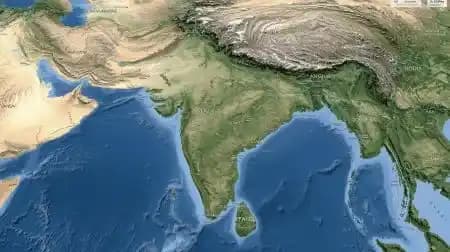
Geography of India ભારતનો ભૂગોળ એ એક અત્યંત વ્યાપક અને રોચક વિષય છે જે ભારતની ભૌગોલિક સ્થિતિ, ભૌતિક રચના, આબોહવા, નદીઓ, ખનિજ સંપત્તિ, કૃષિ, અને જૈવ વિવિધતાનો સમગ્ર અભ્યાસ કરે છે. The Geography of India is a vast, rich, and immensely significant subject that examines the physical, climatological, biological, human, economic, and regional geographical characteristics of the Indian subcontinent — the world's seventh largest country by area and most populous nation, covering an area of approximately 3.29 million square kilometers and stretching from the snow-clad Himalayan peaks in the north to the tropical coastlines of the Indian Ocean in the south. In the Gujarati language context, the study of India's geography holds special importance for students appearing in Gujarat's state-level competitive examinations, board examinations, and teacher eligibility tests, as well as for citizens of Gujarat who seek to understand the geographical foundations of India's extraordinary natural and cultural diversity within their own linguistic framework, making complex geographical knowledge accessible and relatable through the medium of their mother tongue. India's physical geography is characterized by remarkable diversity, encompassing six major physiographic divisions that each possess distinct landforms, geological histories, ecological characteristics, and human geographies. The Northern Mountain Region, comprising the Himalayas, the Karakoram Range, and the associated Trans-Himalayan ranges, forms the world's youngest and highest mountain system, extending for over 2,500 kilometers along India's northern and northeastern borders. The Himalayas serve not only as a natural barrier against cold Central Asian air masses but also as the source of India's most important rivers, including the Indus, Ganga, and Brahmaputra systems, which collectively sustain the agricultural and economic life of hundreds of millions of people. The Northern Plains — formed by the alluvial deposits of these great river systems over millions of years — constitute one of the world's most fertile and densely populated agricultural regions, producing the majority of India's food grains. The Peninsular Plateau, one of the world's oldest landmasses, comprises the Deccan Plateau, the Central Highlands, and the Western and Eastern Ghats, harboring rich deposits of minerals including iron ore, coal, manganese, bauxite, and diamonds. The Coastal Plains and the Island Groups — including the Andaman and Nicobar Islands in the Bay of Bengal and the Lakshadweep Islands in the Arabian Sea — complete India's extraordinary physiographic diversity. In the Gujarati language educational context, the Geography of India covers essential topics including India's location and extent, political divisions and administrative boundaries, drainage systems and river basins, monsoon climate and rainfall distribution, soil types and their agricultural significance, natural vegetation and forest types, wildlife and biodiversity hotspots, mineral and energy resources, agricultural patterns and major crops, industries and industrial regions, population distribution and demographic characteristics, transportation networks, and environmental issues. Gujarat's own geography — its coastal location along the Arabian Sea with India's longest coastline, the Rann of Kutch, the Gir Forest (home of the Asiatic lion), the Gulf of Khambhat, the Sabarmati and Narmada river systems, and its rich agricultural and industrial development — forms an important regional component of India's broader geographical narrative. Major geographical concepts such as the rain shadow effect, monsoon circulation, plate tectonics, river erosion and deposition, soil formation, and ecological zonation are explained in the Gujarati language to ensure clear conceptual understanding for Gujarati-medium students. The Geography of India is an essential subject for GPSC, GSSSB, TET, TAT, and other competitive examinations in Gujarat, and a thorough understanding of India's geography in the Gujarati medium empowers students to connect geographical knowledge with their own lived environment and cultural context, fostering both academic excellence and a deeper sense of national identity and environmental responsibility.
English Grammar
Start Quiz
0/26
English Grammar is the systematic set of structural rules, principles, and conventions that govern the correct and effective use of the English language in speaking, writing, reading, and listening, forming the foundational framework upon which all English communication — whether casual conversation, academic writing, professional correspondence, literary expression, or public discourse — is built. As the most widely spoken and globally influential language in the world, English serves as the primary medium of international communication in business, science, technology, diplomacy, education, and popular culture, making a strong command of English grammar an indispensable skill for students, professionals, academics, and citizens across the globe. English grammar provides the rules for constructing grammatically correct and semantically meaningful sentences, enabling speakers and writers to express their thoughts, ideas, emotions, and intentions with clarity, precision, and stylistic effectiveness across an enormous range of communicative contexts and purposes. English grammar is organized into several fundamental components and levels of linguistic analysis, each addressing different aspects of the language's structure and usage. Phonetics and phonology study the sound system of English, including the production, classification, and patterning of individual speech sounds and the rules governing their combination in words and sentences. Morphology examines the structure of English words, including the processes of word formation through prefixes, suffixes, roots, compounding, and derivation, as well as the grammatical categories of number, tense, aspect, case, gender, and comparison. Syntax — the heart of grammar — studies the rules governing the arrangement of words into phrases, clauses, and sentences, covering topics such as subject-verb agreement, sentence types (declarative, interrogative, imperative, and exclamatory), active and passive voice, direct and indirect speech, phrase and clause structures, and complex and compound sentence construction. Parts of speech — including nouns, pronouns, verbs, adjectives, adverbs, prepositions, conjunctions, and interjections — are the basic building blocks of English sentences, each performing distinct grammatical functions within the sentence structure. Advanced English grammar encompasses a rich array of topics that enable learners to achieve greater sophistication, nuance, and precision in their use of the language. Tense and aspect — including the twelve primary tense forms of the English verb system covering simple, continuous, perfect, and perfect continuous aspects in present, past, and future time frames — enable speakers and writers to express temporal relationships, ongoing processes, completed actions, and hypothetical situations with remarkable grammatical exactness. Articles (a, an, the), determiners, quantifiers, and modifiers play crucial roles in specifying reference and degree within English noun phrases. Modal verbs — including can, could, may, might, shall, should, will, would, must, and ought to — express a wide range of meanings related to ability, possibility, permission, obligation, and inference. Conditional sentences — covering zero, first, second, third, and mixed conditionals — enable the expression of hypothetical situations and their consequences. Punctuation rules governing the use of commas, semicolons, colons, apostrophes, quotation marks, and hyphens are essential for clear written communication. The distinction between formal and informal registers, idiomatic expressions, collocations, and the avoidance of common grammatical errors — including subject-verb disagreement, dangling modifiers, run-on sentences, and incorrect pronoun reference — are important dimensions of advanced English grammar proficiency. For students in India, particularly those preparing for board examinations, competitive tests such as UPSC, CAT, IELTS, TOEFL, and GRE, or seeking success in English-medium professional and academic environments, a thorough mastery of English grammar is one of the most transformative and broadly applicable academic investments, opening doors to educational opportunities, career advancement, and effective participation in the global knowledge economy.

Science(GU)
Start Quiz
0/4
Science વિજ્ઞાન એ કુદરત અને પ્રકૃતિના રહસ્યોને વ્યવસ્થિત અવલોકન, પ્રયોગ, અને તાર્કિક વિચારણા દ્વારા સમજવાનો પ્રયાસ છે, જે માનવ સભ્યતાના વિકાસ અને પ્રગતિનો સૌથી શક્તિશાળી આધારસ્તંભ છે. Science is the systematic, empirical, and evidence-based pursuit of knowledge about the natural world, encompassing the study of physical, chemical, biological, and earth sciences through structured observation, experimentation, hypothesis testing, and logical reasoning to discover the laws, principles, and mechanisms that govern the universe and all its phenomena. In the Gujarati language educational context, science occupies a position of paramount importance in the school curriculum from primary through higher secondary levels, providing Gujarati-medium students with a foundational understanding of the natural sciences in their mother tongue — making complex scientific concepts more comprehensible, engaging, and practically relevant for learners who are most comfortable thinking and learning in Gujarati. The study of science in Gujarati medium schools follows the curriculum framework prescribed by the Gujarat Secondary and Higher Secondary Education Board (GSEB), which aligns with national standards while incorporating state-specific educational priorities and pedagogical approaches. The Gujarati-medium science curriculum is broadly organized around the three foundational branches of natural science — Physics, Chemistry, and Biology — along with Earth and Environmental Science, each illuminating different dimensions of the natural world and equipping students with distinct sets of scientific concepts, principles, and investigative skills. Physics, known as "ભૌતિક વિજ્ઞાન" in Gujarati, explores the fundamental nature of matter, energy, force, and motion, covering essential topics such as mechanics (Newton's laws of motion, gravitation, and simple machines), thermodynamics (heat, temperature, and states of matter), optics (light, reflection, refraction, and the human eye), electricity and magnetism (electric circuits, electromagnetic induction, and direct and alternating current), sound and waves, and modern physics (atomic structure, radioactivity, and nuclear energy). Chemistry, or "રસાયણ વિજ્ઞાન," studies the composition, structure, properties, and transformations of matter, encompassing the periodic table of elements, chemical bonding, acids bases and salts, chemical reactions and equations, metals and non-metals, carbon and its compounds, polymers, and industrial chemistry. Biology, or "જીવ વિજ્ઞાન," examines the structure, function, reproduction, and evolution of living organisms, covering topics including cell biology, human anatomy and physiology, plant biology, genetics and heredity, evolution and natural selection, ecology and ecosystems, and biotechnology. Science education in the Gujarati language plays a transformative role in developing scientific literacy, critical thinking, and rational inquiry among students in Gujarat, equipping them with the intellectual tools to question assumptions, evaluate evidence, solve problems, and make informed decisions as citizens in a technologically complex society. The practical dimension of science education — through laboratory experiments, field observations, science projects, and hands-on investigations — is emphasized in the GSEB curriculum to develop students' experimental skills, scientific temperament, and appreciation for the empirical foundations of scientific knowledge. Science education in Gujarati is particularly crucial for preparing students from rural and semi-urban areas of Gujarat — where English-medium education may be less accessible — for careers in medicine, engineering, agriculture, environmental science, and technology, as well as for competitive examinations such as GPSC, GSSSB, TET, TAT, and various science-based entrance tests. Landmark scientific achievements of Gujarati and Indian scientists — including those of Vikram Sarabhai, the founder of India's space program and a proud son of Gujarat — inspire Gujarati-medium science students to aspire to excellence in scientific inquiry and innovation. As Gujarat continues its rapid industrial, technological, and scientific development, science education in the Gujarati language remains the most powerful vehicle for democratizing access to scientific knowledge, nurturing the next generation of scientists, engineers, and informed citizens, and ensuring that the benefits of scientific progress reach every corner of this vibrant and progressive state.
Explore More Categories
Discover a wide range of quiz categories to test your knowledge and have fun!

Business World
Explore the Business World and test your understanding of commerce, management, and business statistics.
Explore Category

History
Play History quizzes and test your knowledge of world events, empires, and civilizations through fun and challenging MCQs.
Explore Category
Competitive exams
Practice MCQ quizzes for all competitive exams with GK, Aptitude, Reasoning, English and more.
Explore Category

Civilizations
Explore the history, culture, and achievements of ancient civilizations through this quiz.
Explore Category

Computer Science & IT
Covers Programming, Data Structures, Algorithms, Databases, Web Development, Networking, and Cybersecurity.
Explore Category