Q1. Plants cannot grow in the ___ because sunlight cannot reach the cold depths.
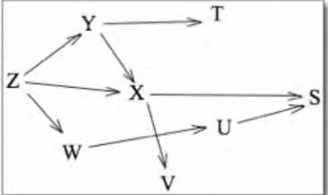
Q2. What are two letters that represent tertiary consumers in the food web?
Q5. When two species benefit from a relationship, it is considered to be

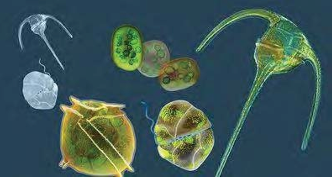
Q6. The plankton that are microscopic and plant like are called
Q7. If the plant population decreased, the amount of carbon dioxide in the atmosphere would
Q8. Most desert animals are small because
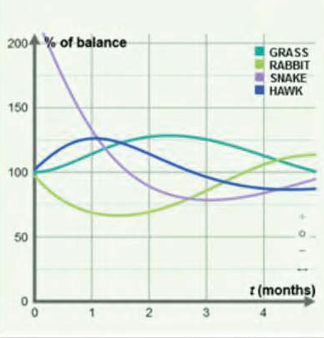
Q9. What most likely caused the rabbit population to decrease over the f irst time unit shown in the following graph? Pay close attention to the (y) axis | and what it is telling you.
Q10. What is the initial source for global winds and convection in the atmosphere?
Q11. Eutrophication in lakes results from
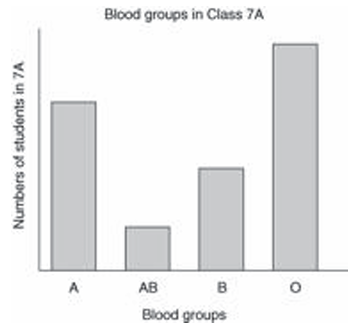
Q12. What is the type of variation shown in this chart? Tick one box
Q13. How do animals get the nitrogen they need?
Q14. What is the smallest level of ecological organization
Q15. TRUE OR FALSE?Water is a biotic factor
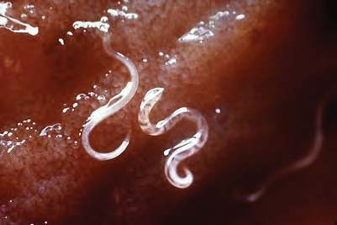
Q16. Hookworms enter the human body by burrowing into the skin of the feet. Once in the skin, they enter the bloodstream and travel to the small intestine where they attach to the walls and begin to drink the person’s blood and weaken the victim.
Q17. Habitat loss from separation of an ecosystem into small pieces of land.
Q18. Which organism is a link between an aquatic food web and a terrestrial food web?
Q19. Which is true of adaptations
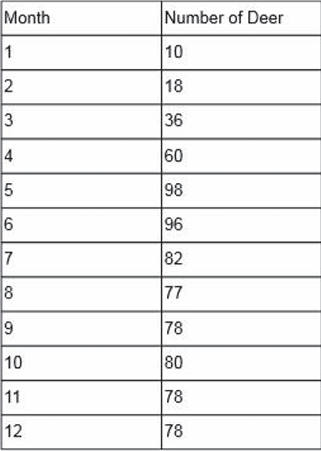
Q20. What is the carrying capacity of the deer population?
Q21. The non-living part of an ecosystem
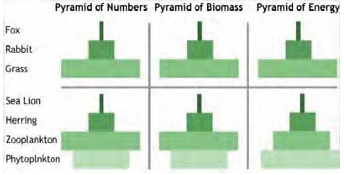
Q22. In the ecological pyramids above, which type(s) of pyramid provides an example with an inversion?
Q23. one organism kills and eats another
Q24. The development of an ecological community in an area that was once inhabited but experienced a catastrophe; soil is present
Q25. An interaction in which an animal feeds on plants is called