Select Category
All Categories
Accounting
Agriculture
Astrobiology
Banking & Finance
Business World
Civilizations
Commerce & Economics
Competitive exams
Computer Science & IT
Current affairs
Earth Science
Education
Environment
Explore the Animal World
Food chain
General Knowledge
Geography Map
Green Life
History
Human Health
Journalism
Law
Science
Social Science
TAX
About Us
Contact Us
Login
Botany - Part 3
1
of
25
💡
Hints:
3
Q1. The largest vein in the center of the leaf is called the
A. terminal bud
B. xylem
C. phloem
D. midrib
Q2. Which term refers to cells of similar appearance and function?
A. Tissues
B. Structures
C. Plants
D. Organs
Q3. What is adhesion?
A. Water’s ability to stick to itself
B. Water’s ability to stick to other substances
C. The strength of the cohesion of all the water molecules combined
D. Tape, glue and other adhesives
Q4. Which part of the flowers produces ovules?
A. Pistil
B. Stamen
Q5. Is this
A. Contractile roots
B. Pneumatophores
C. Buttress roots
D. Propagative roots
Q6. The best soil for plant growth is
A. clay
B. sand
C. loam
D. peat
Q7. The positive particles of an atom are
A. electrons
B. positrons
C. neutrons
D. protons
Q8. What is the form of sugar being move to companion cells?
A. water
B. minerals
C. sucrose
D. stomata
Q9. Responsible to give cell its shape and A.K.A cell jello.
A. Cytosol
B. Cytoplasm
C. Chromatin
D. Chromosomes
Q10. What is the main function of the Apical Meristem?
A. Transportation of water and nutrients
B. Protection of the root cap
C. Location of the growth of cells using mitosis
D. Allows gases to enter and leave the cell
Q11. Why is the trunk of the tree important?
A. It pulls nutrients and water from the soil.
B. It is the central support system.
C. It produces oxygen through Photo synthesis.
D. It provides shade.
Q12. One of the following is an oil seed crop
A. Marigold
B. Sunflower
C. Roses
D. Crysanthemum
Q13. What is the function of the Nucleus?
A. Haas no functionj
B. Moves the cell
C. Directs a cells activity
D. Keeps the cell in one place
Q14. It is the application of statistical methods to designing experiments in medicine.
A. Biomimetics
B. Bioengineering
C. Biostatistics
D. Biology
Q15. In plant cells, telophase is initiated by the formation of what structure?
A. cleavage furrow
B. chromatin
C. centrioles
D. phragmoplast
Q16. Total stem parasite is
A. Viscum
B. Cuscuta
C. Rafflesia
D. Santalum
Q17. Father of genetics is
A. Maendel
B. morgon
C. Mc.Carthy
D. Griffith
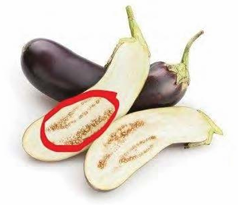
Q18. What is it?
×
A. Leaf
B. Seed
C. Stem
D. Fruit
Q19. What major energy transformation occurs during photosynthesis?
×
A. Thermal–> Chemical
B. Kinetic–> Radiant
C. Chemical–> Radiant
D. Radiant–> Chemical
Q20. Which of the following plant organs functions to absorb nutrients and store food?
A. stem
B. leaf
C. root
D. xylem
Q21. Who proposed the model of nucleosomes?
A. S.J.SingerandG.Nicolsonin1972
B. Robert Brown in 1835
C. R. Kornberg in 1974
D. Joachim Hammerling in 1953
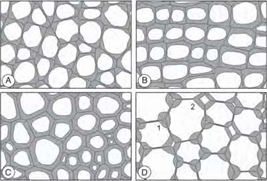
Q22. What type of tissue is shown in the image?
×
A. parenchyma
B. collenchyma
C. sclerenchyma
Q23. Bordeaux mixture was discovered by P.A. Millardet of France during the year 1882 following his chance observation of farmer’s practice for protection against:
A. Podrosphaera leucotricha on apple
B. Uncinula nectar on grapevine
C. Plasmopara viticola on grapevine
D. Venturia inequalis on apple
Q24. The branch of metabolism that is involved in building up molecules is called:
A. anabolism
B. catabolism
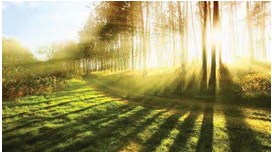
Q25. Identify the photo shown below.
A. Flowers
B. Leaves
C. Fruits
D. Stem
Submitting Your Quiz...
Please wait while we process your answers