Select Category
All Categories
Accounting
Agriculture
Astrobiology
Banking & Finance
Business World
Civilizations
Commerce & Economics
Competitive exams
Computer Science & IT
Current affairs
Earth Science
Educational Development
Environment
Explore the Animal World
Food chain
General Knowledge
Geography Map
Green Life
History
Human Health
Journalism
Law
Science
Social Science
TAX
About Us
Contact Us
Login
Botany - Part 1
1
of
25
💡
Hints:
3
Q1. the emission of water vapor from the leaves of plants
A. tropism
B. translocation
C. transpiration
D. collencyma
Q2. a plant organ that absorbs water and minerals from the soil
A. cuticle
B. root
C. leaf
D. stem
Q3. Nullisomy is represented by
A. 2n -2
B. 2n -1
C. 2n + 1
D. 2n + 2
Q4. Why might plants want to store food in their roots?
A. They store food for the winter in their roots
B. The roots can’t grow without a lot of food
C. They are greedy
D. The plants need more food in the summer when it is hot
Q5. This compound gives cell walls stiffness
A. glycoprotein
B. pectin
C. hemicellulose
D. phospholipids
Q6. The producers absorb phosphorus in the form of
A. Minerals
B. Phosphate ions
C. Chemical
D. Gaseous
Q7. Genes located close together on the same chromosome and inherited together are called
A. Linked genes
B. Unlinked genes
C. Coupling
D. Repulsion
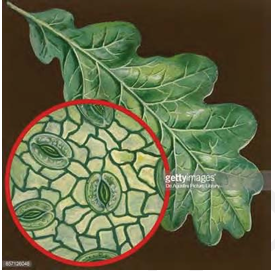
Q8. What is pictured in the red circle?
×
A. Stomata
B. Veins
C. Vascular Bundles
D. Apical Meristems
Q9. Angiosperms are
A. Closed seeded
B. Open seeded
C. Both
D. None of the above
Q10. Which one of the following is correctly matched?
A. Passive transport of nutrients-ATP
B. Apoplast- Plasmodesmata
C. Potassium ___ Readily mobilize
D. Bakane of rice seedlings- F Skoog
Q11. How many Valence Electrons does Argon have?

×
A. 2
B. 3
C. 8
D. 18
Q12. Improved Wheat varieties are
A. Sonalika
B. Sharbati Sonora
C. Kalyan Sana
D. All the above
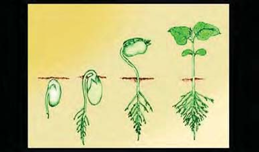
Q13. Which part of the plant shows positive geotropism?
×
A. Stem
B. Leaves
C. Roots
D. Seed
Q14. This is the type of ground tissue that is very fibrous and stringy, providing upright sturdiness for plants. Celery strings are primarily made of this.
A. Parenchyma
B. Collenchyma
C. Sclerenchyma
Q15. Mycology is the study of
A. Virus
B. Hydrilla
C. Rhizobium
D. Fungi
Q16. The stem growing upward and the roots downward is
A. phototropism
B. geotropism
C. photosynthesis
D. radiant energy
Q17. Algae and other submerged plants in water float during day time and sink at night, because
A. They come up to enjoy some time
B. They lose weight at night
C. They become buoyant due to accumulation of O2 as a result of photosynthesis
D. They become light due to food ma terial accumulation
Q18. Data obtained by the investigator from personal experimental study is called
A. Tertiary data
B. Primary data
C. Secondary data
D. Quaternary data
Q19. External environmental factors controlling growth and development include
A. light
B. water availability
C. minerals
D. all of these
Q20. It is the green coloring pigment that captures light energy from the sun
A. chloroplast
B. chlorophyll
C. chloroform
Q21. Part of the plant which conducts water to all parts of the plant is called as
A. Stem
B. Root
C. Leaf
D. Flowers
Q22. The cosmic task of the roots is to hold the water in the ground.
A. TRUE
B. FALSE
Q23. Identify the Bryophyte
A. Mushroom
B. Nostac
C. Riccia
D. Fern
Q24. Study of bryophyte is called?
A. Bryology
B. Algology
C. Mycology
D. Lichenology
Q25. Plants use ___ and release ___
A. Nitrogen; Oxygen
B. Carbon Dioxide; Oxygen
C. Methane; Carbon Dioxide
D. Carbon Dioxide; Nitrogen
Submitting Your Quiz...
Please wait while we process your answers